
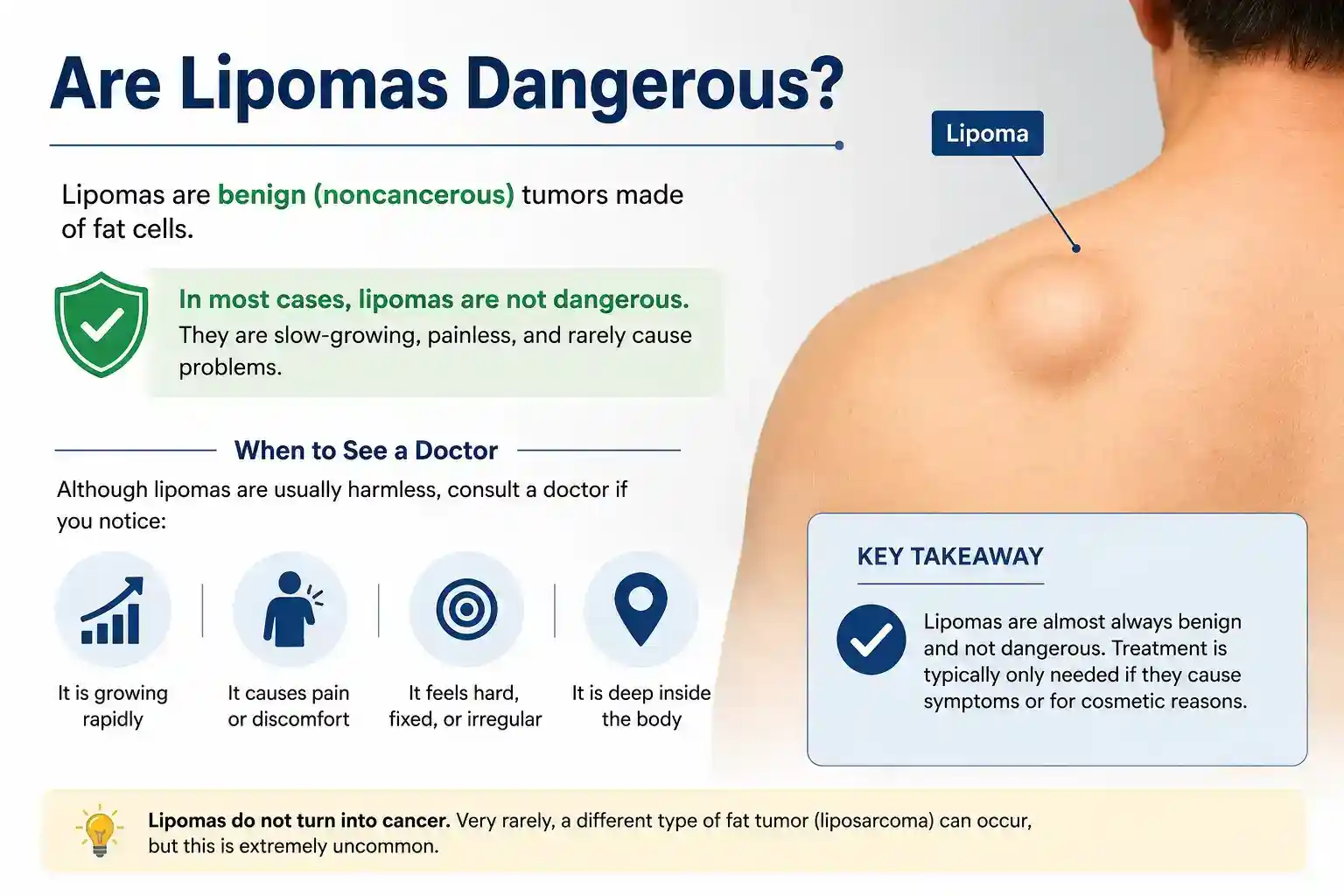
Are Lipomas Dangerous?
Lipomas are soft, fatty lumps that develop under the skin and are usually harmless. They are one of the most common types of non-cancerous growths seen in adults. Many people become worried after noticing a lump under the skin and often ask, “Are lipomas dangerous?”
In most cases, lipomas are not dangerous and do not cause serious health problems. However, some lipomas may grow larger, become painful, or create cosmetic concerns, making medical evaluation important.
Understanding the symptoms, causes, and treatment options for lipomas can help patients seek timely medical advice and avoid unnecessary anxiety.
What is a Lipoma?
A lipoma is a slow-growing lump made up of fat tissue that develops beneath the skin. Lipomas are generally soft to the touch, movable, and painless.
They commonly appear on:
- Neck
- Shoulders
- Back
- Arms
- Thighs
- Abdomen
Lipomas can occur in people of any age but are more common in adults between 40 and 60 years of age.
Are Lipomas Dangerous?
In most situations, lipomas are not dangerous because they are benign, meaning they are non-cancerous.
However, there are certain situations where a lipoma should be evaluated by a doctor.
When Can a Lipoma Become a Concern?
A lipoma may require medical attention if:
- It grows rapidly
- Becomes painful
- Causes discomfort while moving
- Presses on nearby nerves
- Changes in shape or size
- Causes cosmetic concerns
Although rare, some lumps may resemble lipomas but could be other conditions that need proper diagnosis.
Common Symptoms of Lipoma
Lipomas usually have characteristic features that help identify them.
Common symptoms include:
- Soft lump under the skin
- Slow-growing swelling
- Painless mass
- Easily movable lump
- Doughy texture
Most lipomas are small, but some can increase in size over time.
Causes of Lipoma
The exact cause of lipomas is not fully understood, but several factors may contribute to their development.
Common Risk Factors
1. Genetics
Lipomas often run in families, suggesting a genetic link.
2. Age
They are more commonly seen in middle-aged adults.
3. Minor Injuries
Some patients report lipomas developing after minor trauma, although a direct causal relationship has not been conclusively proven.
4. Medical Conditions
Certain rare conditions can increase the risk of developing multiple lipomas.
Can Lipomas Turn Cancerous?
One of the biggest concerns patients have is whether a lipoma can become cancerous.
Simple lipomas are generally non-cancerous and rarely become dangerous. However, a rare cancerous condition called liposarcoma (tumor of fatty tissue) can sometimes resemble a lipoma.
This is why medical evaluation is important if the lump:
- Grows quickly
- Causes severe pain
- Feels hard
- Is fixed in one position
- Changes suddenly in size
A doctor may recommend tests to confirm the diagnosis.
Diagnosis of Lipoma
Doctors can often diagnose a lipoma through physical examination.
In some cases, additional tests may be required.
Common Diagnostic Tests
- Ultrasound
- MRI scan
- CT scan
- Biopsy
These tests help rule out other conditions and confirm whether the lump is a harmless lipoma.
Treatment Options for Lipoma
Small and painless lipomas may not require treatment. However, treatment may be recommended if the lipoma causes pain, discomfort, or cosmetic concerns.
1. Lipoma Surgery
Surgical removal is the most common and effective treatment for lipomas.
During lipoma surgery, the fatty lump is removed through a small incision. Most procedures are simple and performed under local anesthesia.
2. Liposuction
In some cases, liposuction techniques may be used to reduce the size of the lipoma.
3. Observation
If the lipoma is small and not causing symptoms, the doctor may simply monitor it.
Recovery After Lipoma Removal
Recovery after lipoma surgery is usually quick.
Most patients can return to normal activities within a few days.
Recovery Tips
- Keep the surgical area clean
- Follow doctor’s instructions
- Avoid strenuous activities initially
- Attend follow-up appointments
Proper wound care helps ensure smooth healing.
When to Consult a Doctor
Consult a surgeon if you notice:
- Rapidly growing lump
- Painful swelling
- Multiple lipomas
- Sudden changes in the lump
- Difficulty moving due to the swelling
Early evaluation helps ensure accurate diagnosis and proper treatment.
About Dr. Ashish Dhadas
Dr. Ashish Dhadas is an experienced general and laparoscopic surgeon associated with Samata Hospital in Dombivli. He specializes in the diagnosis and surgical treatment of lipomas, hernia, piles, gallbladder stones, and other general surgical conditions. With a patient-focused approach and advanced surgical techniques, Dr. Ashish Dhadas provides safe and effective treatment for patients.
Conclusion
So, are lipomas dangerous? In most cases, lipomas are harmless, non-cancerous fatty lumps that do not pose serious health risks. However, any lump that grows rapidly, causes pain, or changes in appearance should be evaluated by a doctor.
Early diagnosis and timely treatment can help prevent complications and provide peace of mind. If you notice a suspicious lump or swelling, consulting an experienced surgeon is the best step toward proper care.
“Also Read: Gallbladder Pain? Here’s When You Should Visit a Specialist in Dombivli“
➝https://www.samatahospital.com/gallbladder-pain-heres-when-you-should-visit-a-specialist-in-dombivli/




No Comments
Sorry, the comment form is closed at this time.